
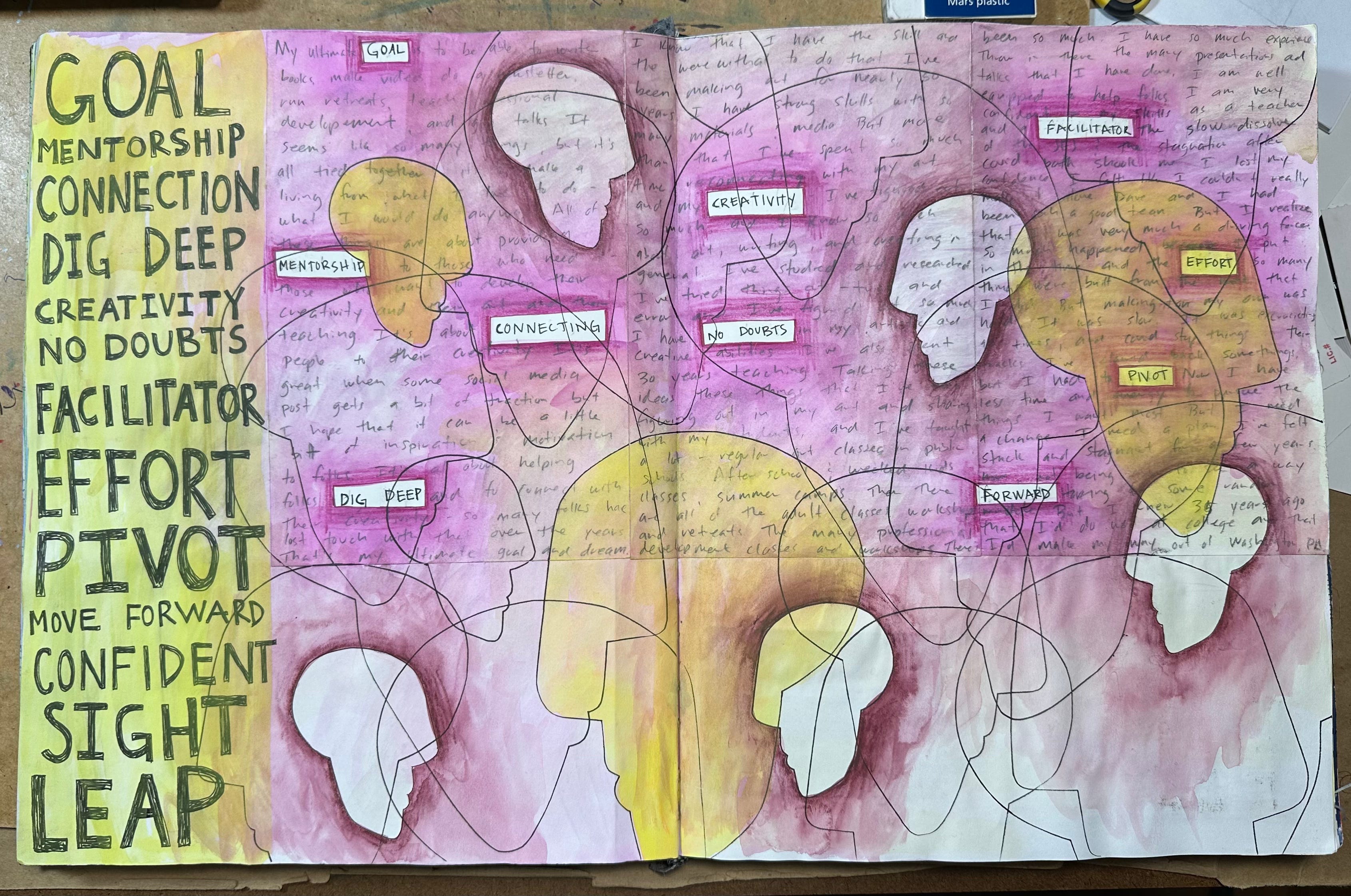
We use words everyday when we speak, when we write, and when we read, and words can be an easy place for new ideas to emerge. We’ve covered stream of consciousness writing, also known as freewriting, and we’ve worked with random words as well. So let’s tackle something a bit different. Let’s think about how we might use lists to generate ideas.
I use lists a lot in my journaling practice, and lists can come from lots of different sources. They might come from our own writing, or perhaps they come from something that we’re reading. We can even brainstorm lists, or even generate lists randomly. The key is to be open to the process.
Generating a list from a source.
I write a lot. Not only do I try to write this newsletter weekly, but I also write a lot as part of my visual journaling practice. I use the stream of consciousness technique all the time to explore how I feel and what I’m thinking about at any given time, and these writings are a gold mine of words and ideas. If you have some of you’re own writing, I encourage you to look through some of it to generate your lists. If you don’t have any writing, perhaps generate some using the stream of consciousness technique or use some other source. Look at a book you’re reading, or perhaps the newspaper. Maybe take a look at a magazine or online article. Perhaps scan the one of your favorite newsletter. You can even use a random word generator or randomly pick pages from a book and select words from those pages.
The key is to look for words that resonate with you. So, these will most likely be big ideas—words that conjure multiple ideas or seem like broad, human concerns. Words like “the” and “an” aren’t going to cut it. But words like “nature,” “needs,” and “change” might work well. Trust your gut and pick words that seem like they can conjure up a lot of ideas. Then create a list. Maybe it’s 4 or 5 words, or maybe it’s more like 10 or 20 words.
Brainstorming a list.
Generating a list from a source like your own writing or the writing of someone else is a great way to tap into different ideas, but sometimes you want to go deeper. Brainstorming is one possible way to explore an idea or a word more specifically. If you’re going to brainstorm a list, you need to have prompt. You can easily pick one of those words that you have already chosen, or you may have something different in mind. Perhaps there’s a word, an idea, a feeling, or a phrase that’s been on your mind lately, and it can provide a great jumping off point.
Though brainstorming is most often a group activity and is common in the business and education worlds, you can approach it solo and develop a list of words, ideas, and phrases that pop into your head when you think of your prompt. But many of the commonly accepted guidelines for group brainstorming still apply.
Defer Judgment: there are no good or bad ideas at this point, so simply get your ideas down. Don’t judge or evaluate them.
Go for Quantity: You want to have many words and ideas as possible, so write down whatever you’re thinking.
Build on Ideas: One idea may spark other ideas, so write them down.
Go for the unusual, wild, silly, or absurd: Have some fun as you brainstorm and get a little crazy with your ideas. Often times, there’s real possibility with these types of ideas.
So what now?
Once you have your list, what do you do next? Well, that’s up to you, but often times there’s a word or an idea that just really jumps out at you. Explore it! Write about it, perhaps using the stream of consciousness technique. If the idea conjures a very specific picture or image in your mind, sketch it out. If you keep a journal, use the word or idea as a topic to explore for a page or two. Maybe let the idea percolate. Maybe engage in some activity that lets the idea sit in the back of your mind, so maybe doodle, wash the dishes, or go for a walk and just allow your subconscious mind to turn that idea over and over. Maybe make something that uses the idea or explores a particular aspect of the idea. Maybe leave it for a while and come back later.
There’s just a lot of possibilities to what you can do with these lists, so get cracking and conjure up some lists of your own.
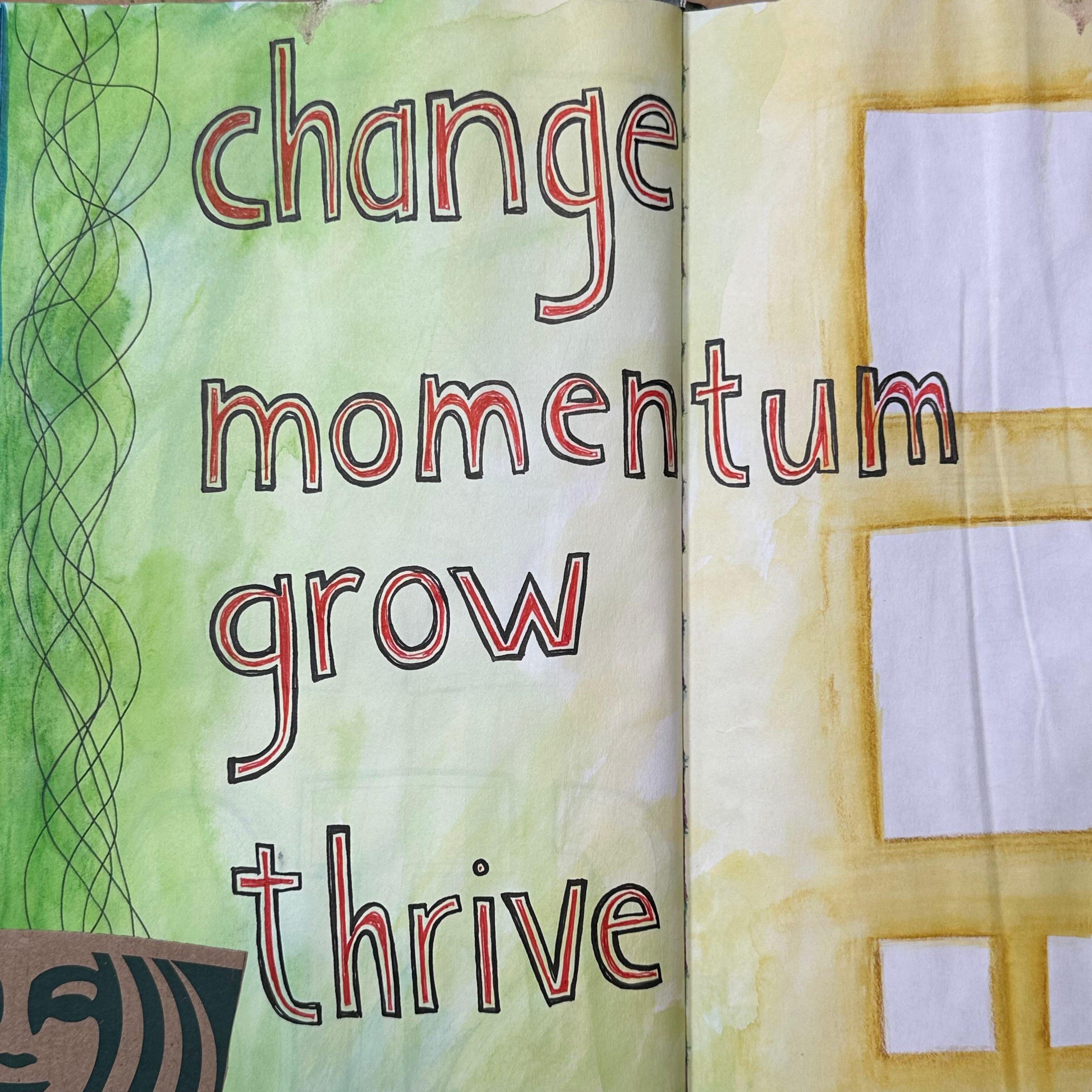
Thank you so much for reading. This is a free publication, and I try to offer something each week. If you find what I share valuable and would like to keep it going please buy my books, hire me to speak, take a workshop, or become a paid subscriber. Paid subscribers have access to a monthly virtual meet up where we meet as a creative community to create together, talk, and share. I’d love to have you as part of that community. Become a paid subscriber:
Happy Creating!
Eric
I’m loving these journal pages of yours, and definitely plan to play around with this idea—list making, pulling words from my own writing for highlight and further reflection. I’m glad I found your work (I’m pretty sure it was Bert & Ernie; I also love your collages and feel inspired to buy some cardstock!)